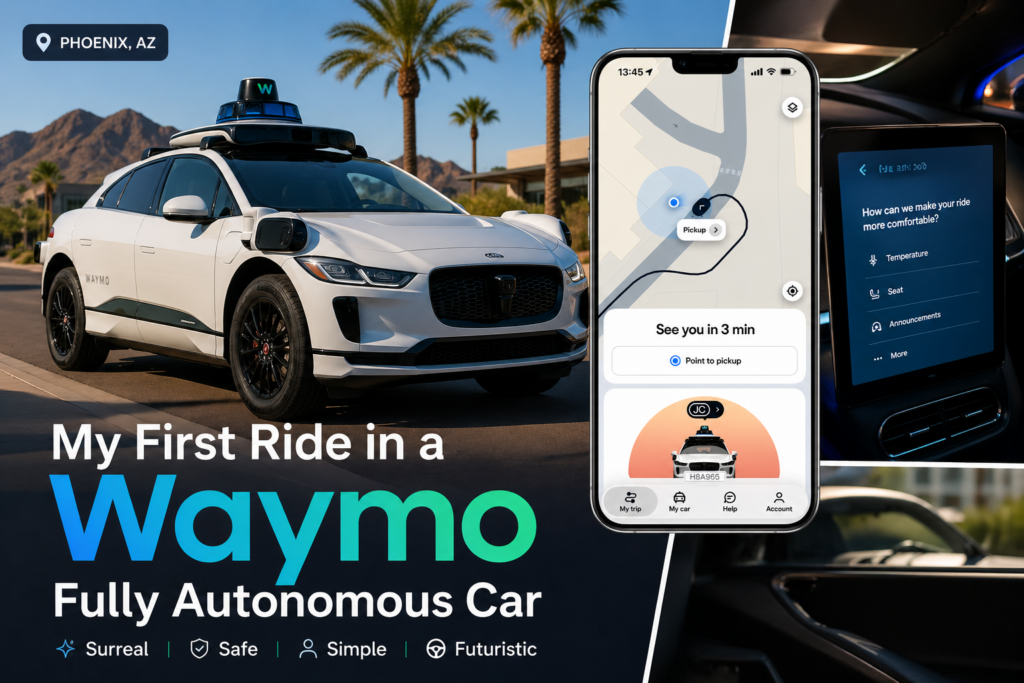
There are certain moments when technology suddenly stops feeling experimental and starts feeling inevitable. My first ride in a fully autonomous Waymo vehicle in Phoenix felt exactly like that.
It was surreal.
Quietly futuristic.
And honestly… much more normal than I expected.
I’ll be including a video below that shows the full experience:
- walking to the vehicle for pickup
- entering the car
- and a timelapse of the ride to the destination
But what surprised me most wasn’t just the technology itself. It was how incredibly simple and intuitive the entire experience felt.
The Pickup Experience
The process started in the app. The interface was clean, minimal, and extremely easy to understand. Once the car arrived, the app guided me directly to the pickup point with a surprisingly calm and confident UX. There was no confusion about:
- where the vehicle was
- which car was mine
- or what I needed to do next
The app handled all of that elegantly. When the vehicle pulled up, it genuinely felt like something from the future. Not in a flashy sci-fi way. More in a: “Oh… this is actually happening now.” kind of way.
Getting Inside
The vehicle unlocked automatically and the interior experience was surprisingly polished. One thing I didn’t expect was the level of comfort and personalization controls available to passengers. There were controls for:
- cabin temperature
- airflow
- seating preferences
- in-car announcements
- accessibility settings
The interface design felt thoughtful and approachable—more like a consumer product than an experimental robotics platform.
That matters. Because for autonomous vehicles to succeed long-term, they can’t just be technologically impressive. They have to feel:
- trustworthy
- intuitive
- comfortable
- and human-centered
This did.
The Ride Itself
And then the strange part happened: The car started driving… with nobody behind the wheel. That took a few moments to fully process.
At first, I found myself constantly watching the steering wheel move on its own. It’s difficult not to. But after a surprisingly short amount of time, it started to feel normal. The vehicle was smooth, cautious, and predictable.
Not aggressive.
Not robotic.
Just… calm.
It handled:
- turns
- traffic
- lane positioning
- pedestrians
- intersections
with a level of consistency that quickly built confidence.
The UX Is the Real Story
From a product and UX perspective, this was fascinating. The autonomous driving technology is obviously impressive. But what really stood out to me was the experience design surrounding it. The app and vehicle interface successfully reduce anxiety by constantly communicating:
- where the car is
- what it’s doing
- and what happens next
That’s incredibly important in autonomous systems. Good UX turns advanced technology into something people can actually trust. And trust is probably the single biggest challenge autonomous transportation faces.
The “Future” Feels Surprisingly Quiet
One thing I kept thinking during the ride was:
The future doesn’t always arrive dramatically.
Sometimes it arrives quietly.
A clean app.
A car pulls up.
No driver.
You get in.
And after a few minutes, it somehow already feels normal.
That might be the most impressive part of all.
Final Thoughts
I expected the technology to impress me. I didn’t expect the overall experience to feel this polished already. The combination of:
- autonomous driving
- thoughtful UX
- intuitive controls
- and calm interaction design
made the experience feel much closer to mainstream reality than experimental novelty.
After this ride, it’s much easier to imagine a future where fully autonomous transportation becomes part of everyday life. And honestly? That future may arrive faster than most people think.