
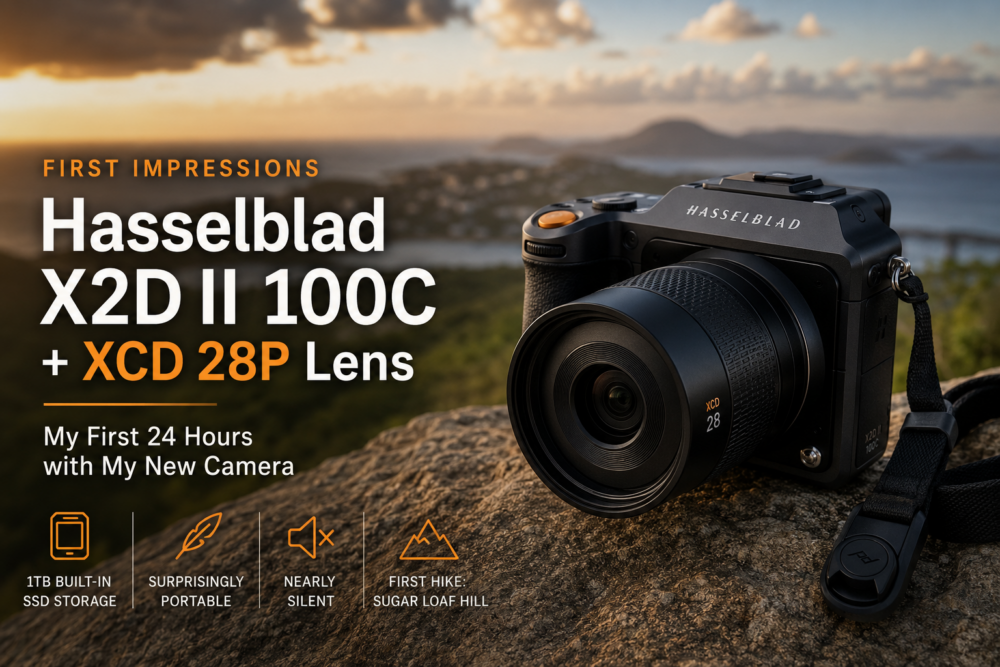
Less than 24 hours after receiving the Hasselblad X2D II 100C and Hasselblad XCD 4/28P lens, I took the setup on its first real-world outing: a morning hike up Sugar Loaf Hill here in Christiansted, St. Croix — also commonly referred to locally as Goat Hill or Goat Mountain.
This wasn’t a formal review. It was simply my first experience using the camera outside of the house after spending years primarily shooting with Sony cameras. And honestly? My first impressions have been overwhelmingly positive.
A Camera Designed with Intention
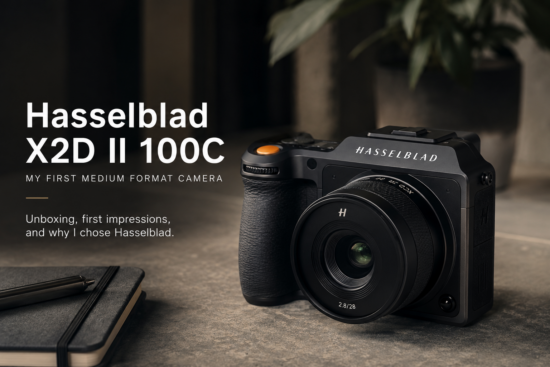
The first thing that stands out about the X2D II is its simplicity. As someone who works in product and design, I absolutely love the industrial design of this camera. It feels incredibly intentional. Unlike many modern cameras that are covered in buttons, switches, and controls, the X2D II feels refined and focused.
The controls that matter are easy to reach, while still allowing for a surprising amount of customization. The front and rear control wheels can be customized for different functions, and the camera supports profiles and software-level customization as well. It strikes a really nice balance between simplicity and flexibility.
The overall experience feels less like operating a gadget and more like using a carefully designed creative tool.
The Built-In SSD is Brilliant
One feature I already appreciate more than I expected is the built-in 1TB SSD storage. Considering the enormous file sizes produced by a 100-megapixel medium format sensor, having fast internal storage built directly into the camera just makes sense.
Honestly, I wish more camera manufacturers would move in this direction. The implementation feels seamless, and it removes some of the stress of constantly managing memory cards while traveling.
Heavier Than Expected — But Not Burdensome
One thing that immediately surprised me was the weight. I had researched the camera extensively before purchasing it, so I knew the specifications and overall numbers. But actually holding the X2D II in person was different.
It is definitely heavier than I anticipated. That said, I personally did not find it burdensome. Even paired with the extremely compact 28P lens, the setup still feels substantial in the hand. But the weight also contributes to the premium feel of the camera. It feels dense, solid, and incredibly well-built.
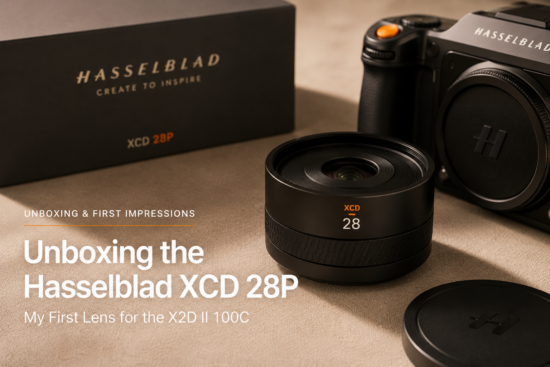
The 28P lens itself is remarkably small for medium format and helps keep the overall setup far more portable than I expected. In fact, when I placed the camera into my bag for the first time, I was genuinely surprised at how little space this configuration occupied.
That portability was one of my biggest concerns before entering the Hasselblad system, so that was reassuring.
Nearly Silent in Real-World Use
One thing I noticed almost immediately while shooting with the 28P was how quiet the camera felt in use.
The XCD 28P does not use the same leaf shutter design found in much of the rest of the Hasselblad XCD lens lineup, yet the camera still felt nearly silent during operation. I wasn’t using the electronic shutter either.
For the type of photography I enjoy — travel, street scenes, quiet environments, and landscapes — the sound level felt completely unobtrusive.
My First Outing: Sugar Loaf Hill
My first real-world experience with the camera was during a hike up Sugar Loaf Hill in Christiansted.
Because I was hiking uphill for roughly 45 minutes in warm Caribbean weather — while trying not to sweat all over a camera I had owned for less than a day — I mostly used the rear display rather than the electronic viewfinder. Even so, the experience felt smooth and intuitive.
The top display is beautiful and provides useful information at a glance, while the rear display is bright and easy to use outdoors. I also experimented with shooting both with and without a circular polarizing filter to compare the results. The image quality coming out of this system is already impressive, even during my very limited first outing.
The One Thing I Didn’t Love: The Strap
So far, there’s really only one aspect of the system that disappointed me slightly: the included strap. For a camera of this weight and price point, I expected something more comfortable and better padded.
The included strap feels surprisingly basic — especially compared to the overall premium feel of the camera itself.
Coming from the Sony RX10 IV, I honestly felt the included Sony strap was about equally comfortable, despite the Hasselblad system costing several times more.
Because of that, I quickly switched over to my Peak Design strap setup instead.
I reused the Hasselblad attachment clasps and connected them to the Peak Design anchors, which made the setup significantly more comfortable for extended carry.
If I’m walking around with this camera all day while traveling, the Peak Design strap is definitely the route I’ll continue using.
Final Thoughts So Far
It’s still incredibly early. I’ve had this camera for less than a full day. But so far, the experience has been wonderful. The X2D II feels:
- beautifully designed
- thoughtfully simplified
- solid and premium
- and surprisingly portable with the 28P lens
More importantly, it feels inspiring to use. And honestly, that may matter more than specifications.
I’ll continue sharing more images, experiences, and impressions as I spend more time with the system — especially during upcoming travel and everyday photography around St. Croix.
For now, I can confidently say is that Entering the Hasselblad system already feels like the beginning of a very enjoyable photography journey.
Watch the Video
I also recorded a video showing the setup and sharing some of these first impressions in real time: