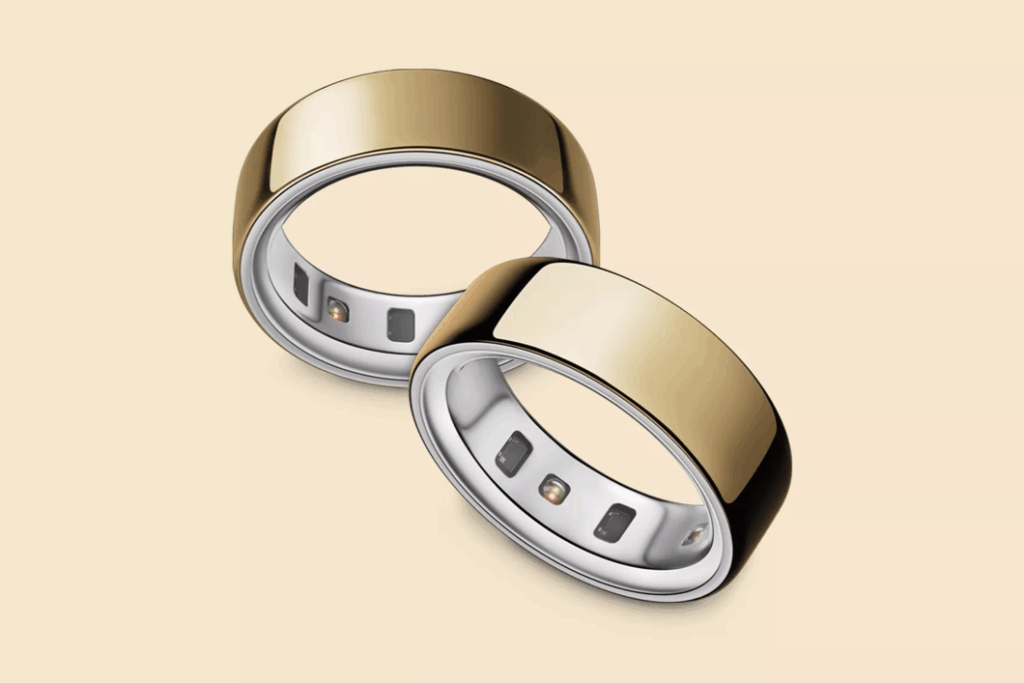
For years, I’ve worn an Apple Watch daily — through workouts, meetings, and even while sleeping to track my sleep quality and monitor sleep apnea. It’s become second nature. Still, I’ve been curious about the Oura Ring, a sleek, screen-less wearable that promises deep insight into recovery, readiness, and overall health.
I ordered the gold version of the Oura Ring (Gen 4) and received it recently. I’ve been wearing it both day and night for about a week now, and while I plan to do a longer-term review later, I already have some thoughts — especially about pricing, value, and accuracy.
The Price Problem
Let’s start here, because it’s hard to ignore.
The Oura Ring starts at $349, and the gold model I chose costs $499. That’s before adding the Oura Membership, which unlocks most of the app’s insights. Membership costs $5.99/month or $69.99/year ($5.83/month average).
By contrast, you can buy an Apple Watch SE for $249 or the latest Apple Watch Series 11 for $399. Those devices include a screen, notifications, GPS, music control, Siri, messaging, phone calls, and even a depth gauge for snorkeling or diving.
It’s a tough comparison — the Oura Ring costs more while offering less functionality in traditional terms.
If you look at it over two years:
- Apple Watch Series 11: $399 total
- Oura Ring (base $349) + Membership ($69.99/year): $489.97 total
That’s about $90 more for a device that tracks sleep, readiness, and recovery — but doesn’t let you interact with anything beyond its app.
Comfort and Design
The Oura Ring is undeniably stylish. Mine feels more like jewelry than tech — which is part of its appeal. It’s lightweight, smooth, and comfortable enough. I am constantly aware that I’m wearing it and since it’s slightly thicker than a traditional ring (e.g., no tech embedded) it does at times feel strange. That said, it’s incredible what they’ve packed in to such a small form factor.
I have a desk job, so I’m typing most of the time, and it hasn’t gotten in the way. I did remove it while lifting weights this week, which probably helped avoid damage.
Many users online have mentioned visible wear or scratching after a few days, but I haven’t seen any yet. After nearly a week, mine still looks brand new. Perhaps more use will tell a different story.
Style and Data
The Oura Ring is undeniably stylish. Mine feels more like jewelry than tech — which is part of its appeal. It’s lightweight, smooth, and comfortable enough to forget it’s there most of the day.
I have a desk job, so I’m typing most of the time, and it hasn’t gotten in the way. I did remove it while lifting weights this week, which probably helped avoid damage.
Many users online have mentioned visible wear or scratching after a few days, but I haven’t seen any yet. After nearly a week, mine still looks brand new. Perhaps more use will tell a different story — I’ll update this post if that changes.
| Metric | Apple Watch Series 10 | Oura Ring 4 |
|---|---|---|
| Awake | 58 minutes | 1 hour 14 minutes |
| REM Sleep | 2 hours 21 minutes | 1 hour 41 minutes |
| Core / Light Sleep | 4 hours 54 minutes | 4 hours 38 minutes |
| Deep Sleep | 57 minutes | 1 hour 38 minutes |
Those are fairly significant differences, especially in REM and Deep Sleep. I’m not yet sure which device is more accurate — and that uncertainty is a little frustrating. For something this data-driven, you expect consistency.
One thing I do prefer is how Oura visually represents Blood Oxygen variations. It’s much easier to understand at a glance than Apple’s presentation in the Health app.
I’ve also noticed big discrepancies in activity tracking. On a recent day, Apple recorded 138 active calories, while Oura logged only 73. That’s nearly a 50% gap — and it makes you wonder how each is defining “activity.” I’ll be keeping a closer eye on that in the coming weeks.
The Membership Question
One thing that stands out is the ongoing membership requirement.
Without an active subscription, you lose access to several insights and analytics that make the ring worthwhile in the first place.
It feels a little strange paying a premium for a device and then a monthly fee just to fully use it. Whether that’s worth it will depend on how valuable Oura’s long-term data proves to be. I’ll revisit this after I’ve had a chance to really see the trends it produces.
Apple Watch vs. Oura: Two Different Philosophies
At first glance, it’s easy to compare them — both track activity, sleep, and health data. But philosophically, they’re different devices.
The Apple Watch is about doing: notifications, communication, apps, and integration into daily life.
The Oura Ring is about being: quietly collecting information and offering insights into your body’s rhythms, readiness, and recovery.
That minimalism is appealing — no buzzing, no distractions — but whether it justifies the price will depend on what kind of user you are.
Final Thoughts
After my first week, I’m impressed with the Oura Ring’s design and data presentation. It feels thoughtful and deliberate. Still, it’s hard not to think about what else $499 could buy — namely, a full-featured Apple Watch.
If you want a discreet, no-screen wearable dedicated to health insights, Oura might be worth the investment. But if you’re already using an Apple Watch, it’s fair to ask whether you’re getting enough additional value for the price.